
Search Chicago Booking Releases
Booking releases in Chicago are handled by both the Chicago Police Department and the Cook County Sheriff's Office. CPD makes the arrests and creates the initial arrest report, but the county jail on South California Avenue is where booking and release records are kept long term. Chicago sees tens of thousands of arrests each year, and the process for finding those records depends on how recent the case is. Current detainees show up in the Cook County inmate locator. For older records, you will need to file a FOIA request with CPD or the Sheriff's Office. Both agencies respond to public records requests under state law.
Chicago Quick Facts
Chicago Police and Booking Releases
The Chicago Police Department is the main law enforcement agency in the city. CPD officers make arrests and write up the initial reports. But after an arrest, the person is processed through the Cook County jail system. That means the booking release record ends up with the Cook County Sheriff's Office, not with CPD. This is how it works across Illinois. City police arrest people. The county sheriff runs the jail and keeps the booking data.
CPD does keep its own arrest records, though. You can ask for copies of arrest reports and case incident files through the department's records division. The CPD Records Section is at 3510 South Michigan Avenue in Chicago. You can call them at (312) 746-6000 to ask about arrest report copies. The department also has a CLEARPATH email system at CLEARPATH@chicagopolice.org for general questions. If you need the actual booking release record showing jail intake and release info, that comes from Cook County, not from CPD.
The Chicago Police Department main site has links to records, reports, and services for the public.
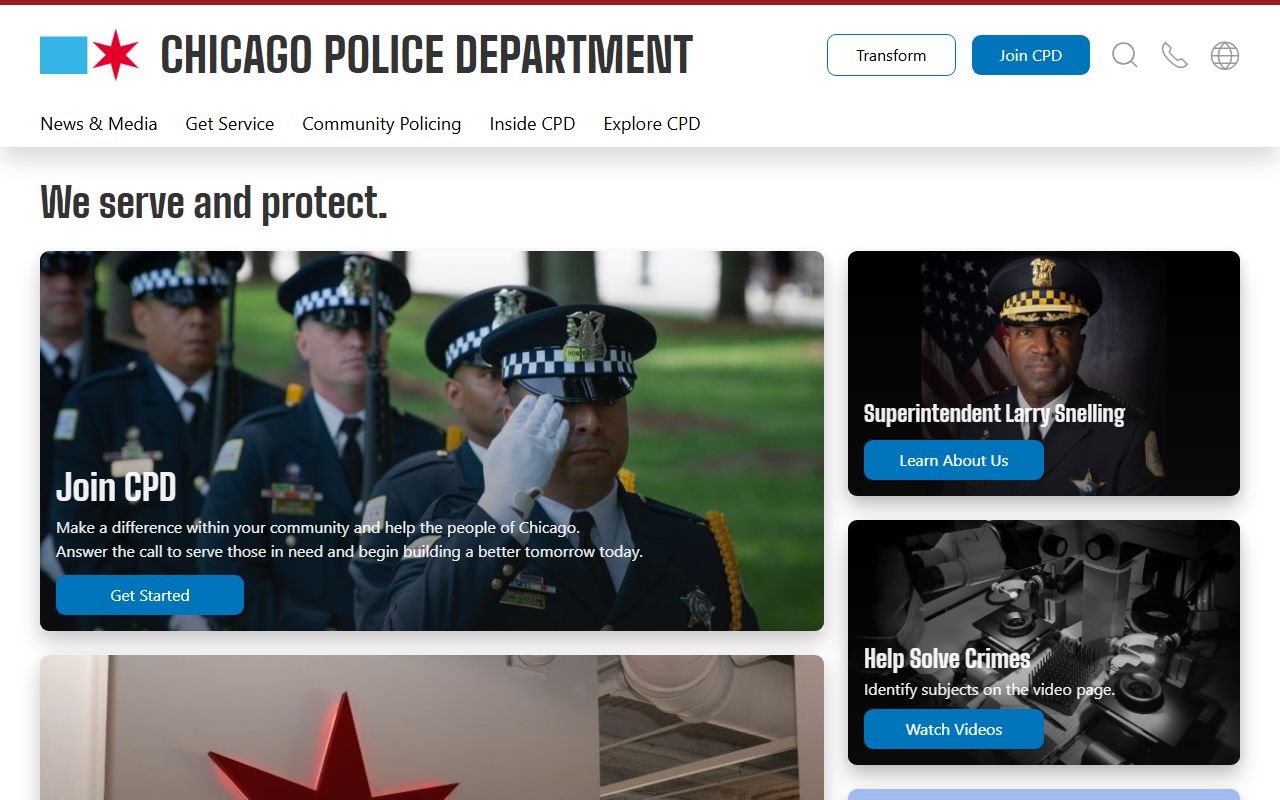
The CPD site gives you access to news, data portals, and contact info for the records section.
| Agency | Chicago Police Department |
|---|---|
| Address | 3510 S Michigan Ave, Chicago, IL 60653 |
| Phone | (312) 746-6000 |
| CLEARPATH@chicagopolice.org | |
| Website | home.chicagopolice.org |
Cook County Sheriff Booking Records
All booking releases for Chicago arrests that result in jail time go through Cook County. The Cook County Jail at 2700 South California Avenue processes roughly 100,000 admissions a year. That includes people arrested by CPD, suburban police, and other agencies. The Sheriff's Office runs an online inmate locator at iic.ccsheriff.org where you can search for anyone currently in custody. It shows the booking ID, charges, bond amount, and next court date.
If someone has already been released, the online tool will not show them. For past booking release records, you need to contact the Cook County Records Department at 773-674-5200. They handle requests for old files and can tell you what you need to submit. The customer service line at 773-674-1945 runs seven days a week from 8:00 a.m. to 8:30 p.m. You can also reach them by email at ccso.feedback@ccsheriff.org. For full details on the Cook County booking release process, see the Cook County booking releases page.
| Agency | Cook County Sheriff's Office |
|---|---|
| Jail Address | 2700 S California Ave, Chicago, IL 60608 |
| Records Dept. | 773-674-5200 |
| Customer Service | 773-674-1945 (7 days, 8 AM to 8:30 PM) |
| Inmate Locator | iic.ccsheriff.org |
FOIA Requests for Chicago Booking Releases
The Illinois Freedom of Information Act (5 ILCS 140) gives you the right to ask for booking release records from any public agency. That covers both CPD and the Cook County Sheriff. Each agency has its own FOIA process, so where you send your request matters. If you want the arrest report from CPD, file with them. If you want the jail booking and release data, file with Cook County.
Under 5 ILCS 140/2.15, arrest reports must be made public within 72 hours of the arrest. That law helps when you need very recent booking data from a Chicago arrest. The agency must respond to your full FOIA request within five business days. CPD and Cook County both allow the first 50 pages free. After that, copy fees are $0.15 per page. Certified copies can cost up to $1.00 each.
The Chicago Police Department page on Chicago.gov has links to the FOIA portal and records request forms.
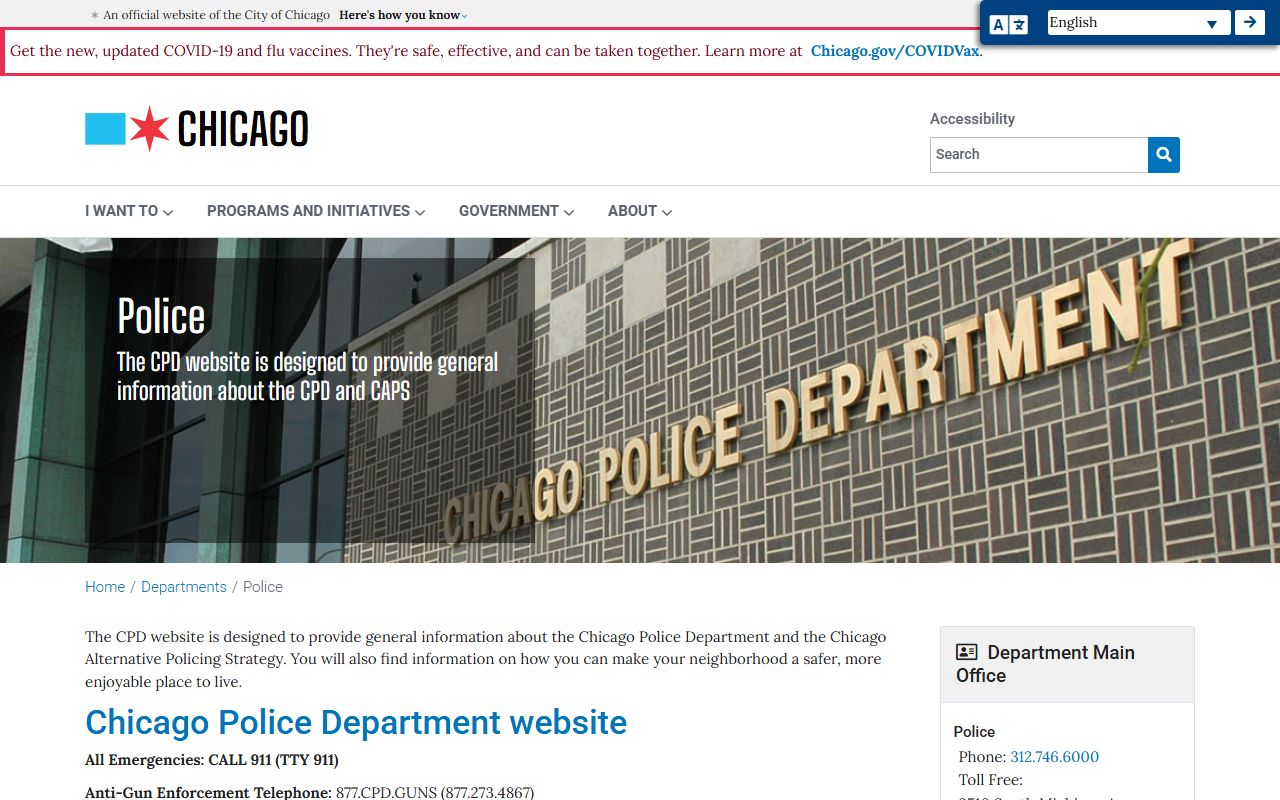
This city page provides direct access to the CPD records division and FOIA submission process for Chicago booking releases.
When you file a FOIA request, include the person's full name, date of birth if you have it, and the approximate date of the arrest. The more details you give, the faster the staff can pull the right file. If the agency denies your request, they must tell you why in writing. You can appeal the decision to the Illinois Attorney General's Public Access Counselor. Most booking release records in Chicago are public, though. Sealed or expunged cases are the main exception under the Criminal Identification Act (20 ILCS 2630).
Chicago Public Safety Data
Chicago has one of the most open data portals of any city in the country. The City of Chicago Data Portal publishes arrest data, crime reports, and other public safety records. You can search by date, district, and type of offense. The data goes back years and gets updated on a regular basis. While this portal does not show full booking release records, it gives you arrest-level data that can help you narrow down what you are looking for.
The data portal is free to use. You don't need an account to search. It can be a good first step before filing a FOIA request. If you find a case in the data portal, the details there can help you write a more specific FOIA request to get the full booking release file from Cook County. The portal also has downloadable datasets if you need bulk data for research purposes.
Illinois Laws on Booking Release Access
State law shapes how booking releases work in Chicago and across Illinois. The Illinois FOIA (5 ILCS 140) is the main law that gives the public the right to see arrest and booking records. It sets the five-day response deadline and the fee caps. The Criminal Identification Act (20 ILCS 2630) controls who can see criminal history records and when records can be sealed or expunged. If a court orders a record sealed, it will not show up in public searches or FOIA responses.
Most booking release records in Chicago stay public unless a judge says otherwise. That means you can look up arrest data, booking dates, charges, and release info for most people. The law does protect certain records, like juvenile cases and some drug-related arrests that qualify for expungement. But the default is public access. You have the right to ask, and the agency must respond.
Nearby Cities
Chicago borders several cities and suburbs that are part of Cook County and the surrounding area. Booking releases for people arrested in these cities go through their own county sheriff offices. If an arrest happened outside Chicago city limits, you will need to check with the right county.